
On January the 31st, 1797, Franz Schubert was born in a family where music was a queen. He very early appeared as a happy and talented musician and singer. His first known composition dates back to 1810. He composed for the rest of his life. In 1813 he obeyed his father and entered teachers’school. In 1814 his first mass was played in the Lichtental church, his first love, Thérèse, singing the soprano part. The following years his beloved’s father did not allow her to marry such a poor man... In 1821 the breach turned final and Thérèse married another man... In 1816, Schubert obtained a year-leave from his position as a schoolteacher; he never returned. In 1818, he
visited the Earl Esterhazy in Zelesz, Hungary, for a few months, teaching
music to his daughter. After this long Hungarian summer, Schubert resisted
his father, who had ordered him to be a schoolteacher again.
He then found himself
homeless and alternatively lived at some friends’ and in rented rooms,
his biggest worry being music, not cosiness. In the morning,
he worked, studied, composed, and in the remaining time he wandered around
and met friends, feeling a kindred spirit with musicians, poets and artists.
Franz Schubert doesn’t display the beauty that inhabits him. He is rather short (1,52m), and, as he neglected the sensual and outward sides of his person, he quickly grew fat. On the summer of 1824, Schubert returned to Hungary and fell in love with Caroline, the Earl’s younger daughter. It was his second great love, yet this time it proved much more unreachable than the first: illness had become his master. At the end of October
1824,
he returned to Vienna altogether torn and happy. This love had brightened
him up and, in the year 1825, the friendly musical evenings
were back again., but for one year only. Soon after, pain and worry beca
Schubert started working on THE WINTER JOURNEY, in February 1827. A “pure stroke of luck ” had him open a book where 12 out of Wilhelm MÜLLER’s 24 poems were written, and he was seized by a feverish urge to compose music on them on one spot. His own anguish found
an echo in these simple poems: Müller too, as he wrote, knew about
his illness and mortality!
Beyong the churchyard figure and the mortality constantly called up by the poet, the musician goes wandering with the souls, and gives us an account of his genius. In the Winter Journey, the poet and the musician are fellow travellers. Here is their way :
The Wanderer cannot go astray, (The
Sign Post - 20) indicates “ The Road from which no one has come back”
, and he must sink into His Death Call ( Does not prevent him From facing the Acute Cruelty of
Regrets ( Nor from suffering Harassing Pain
( And When The Present proves to be no more
than autumn falling leaves (
|
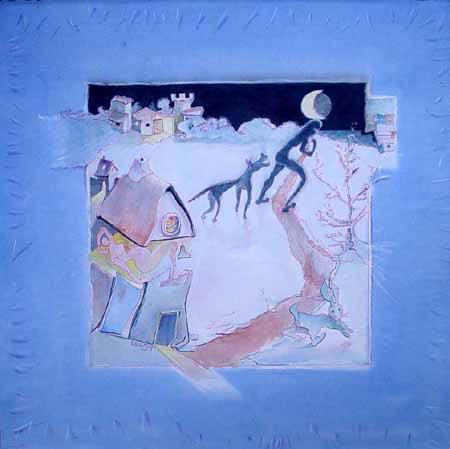
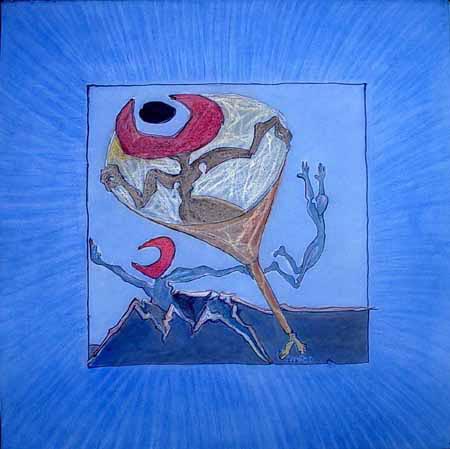
 |
||
| Meanwhile, on March
26th., 1827, Beethoven dies in Vienna, and Schubert is deeply distressed.
The final and yet unwritten part of the Winter Journey bears
the mark of the event.
He completed the last of the 24 lieder in October 1827. He considered it his masterpiece; having put so much of himself into it. Yet, at the first hearing, his friends did not recognise in The Winter Journey the work of the kind Franz. They did not appreciate it as he would have expected. The musician was deeply hurt again. His friends’ lack of understanding... was a hard blow for the musician! Though overwhelmed by pain, with his remaining strength, all his courage and talent, he retired to compose... He passed away while
staying at his brother Ferdinand’s, on November 19th, 1828.
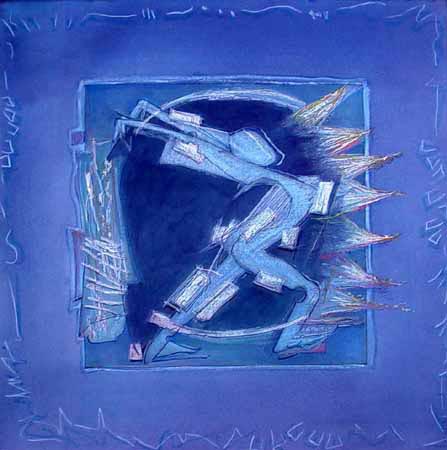
“Welch ein törichtes Verlangen - treibt mich in die Wüstereien?” (Quelle aspiration insensée - m’aiguillonne vers les déserts?)
|
 |


|
 |